The Blasket Islands — Ireland’s Last Parish
There’s something about the journey out towards the Blasket Islands that never gets old.
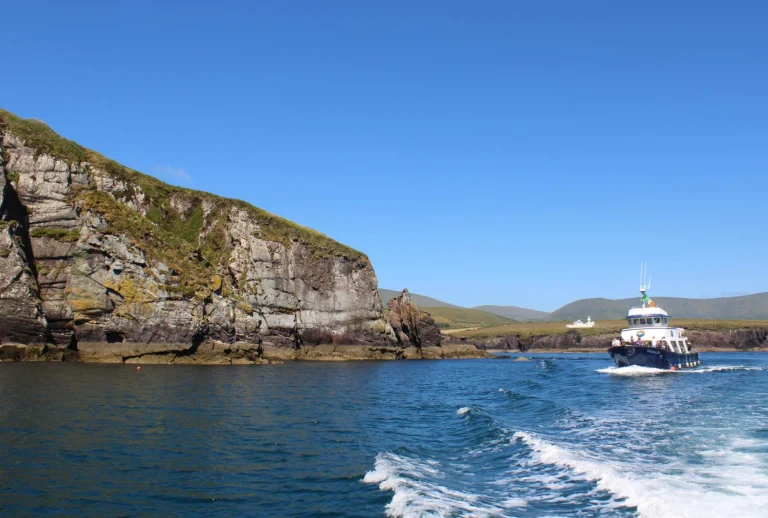
Leaving Dingle Harbour behind, the coastline along Slea Head opens in front of you, cliffs, green fields stretching for miles, the Atlantic crashing below. Some days the colours almost don’t look real.
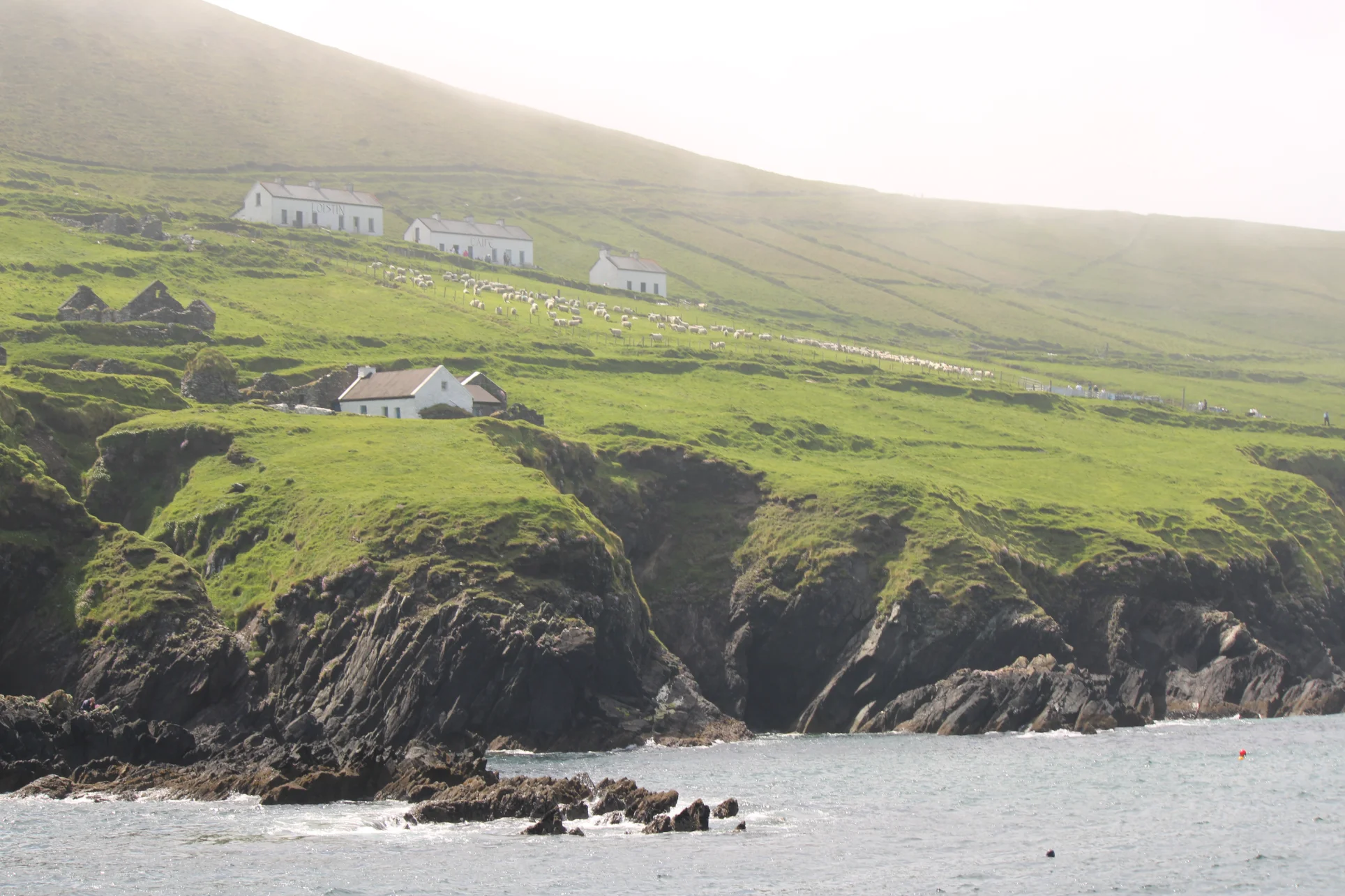
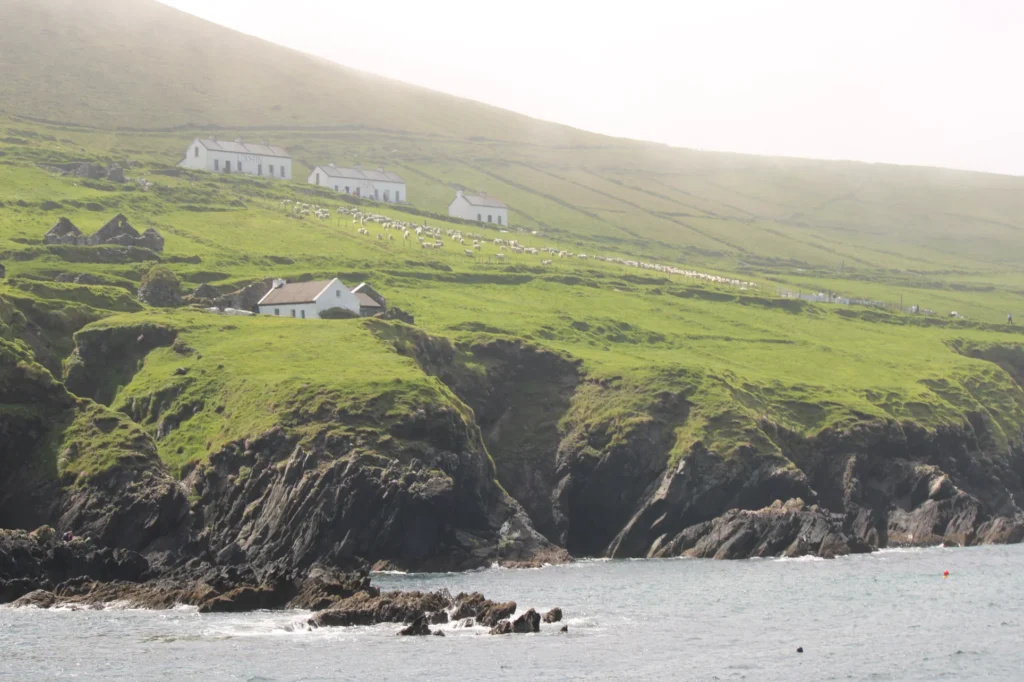
As you round the peninsula, the Great Blasket Island begins to appear on the horizon. Slowly at first, then all at once. And that first proper sight of it, the long sandy beach, the cliffs rising behind it, the hillside scattered with the ruins of the old village, it always stops you for a second.
We could be anywhere in the world. Any secluded island, any wild and beautiful coastline. But we’re home. It’s Ireland. And it’s not far away at all.
The Island and its People
The Great Blasket Island was once home to a small, Irish-speaking community living right on the edge of the Atlantic, known as Ireland’s last parish. At its peak, around 150 people called it home. They fished, they farmed, they told stories, they spoke a language that is at the very heart of Irish culture.
Life was hard. There was no doctor, no priest permanently on the island, and in winter the seas could cut the community off from the mainland for weeks at a time. People always ask, was there a school? There was, a small one. Was there a church? No, islanders rowed to the mainland for Mass. How did they survive the winters? With resilience, and with each other.
But for all the hardship, they also woke up to one of the most beautiful places in Ireland every single day. There’s something that is worth sitting with.
Some of the most celebrated writing in the Irish language came from this tiny island. Peig Sayers, whose memoir was a staple of the Irish Leaving Certificate for generations, was one of the Blaskets’ most famous voices. Tomás Ó Criomhthain and Muiris Ó Súilleabháin wrote books that captured island life in a way that has never been forgotten. The Blaskets gave Ireland some of its greatest storytellers.
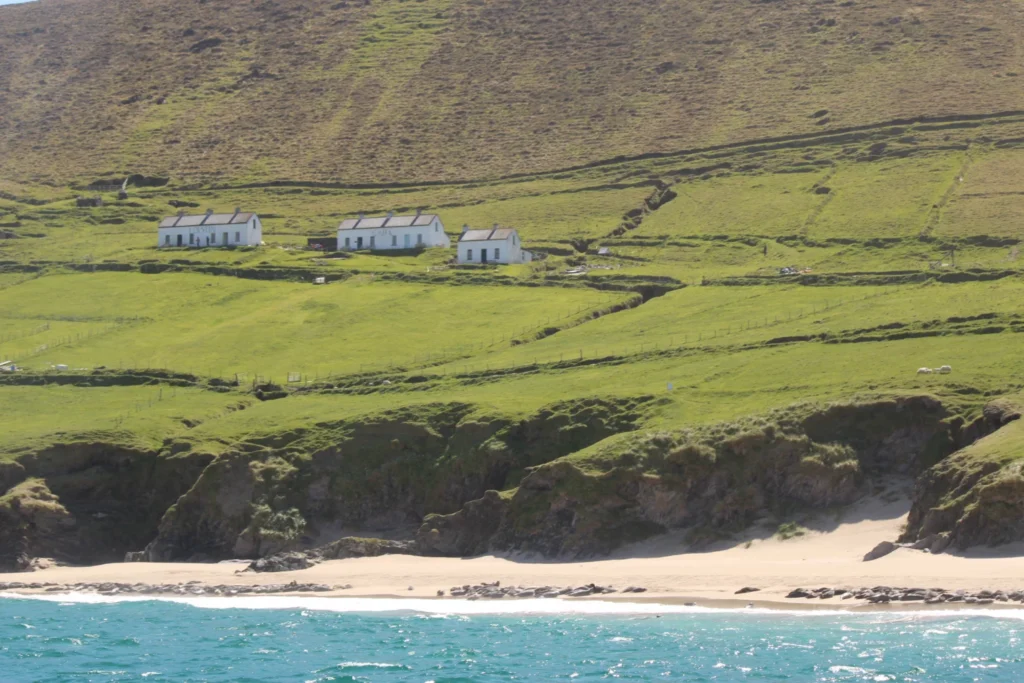
In 1953, the last remaining families were evacuated to the mainland. Over time, life on the island became harder and harder. Eventually the last families left, and the Blaskets fell quiet. The ruins of the village remain on the hillside exactly as they were, open to the sky, still standing, still watching the Atlantic.
From the Water
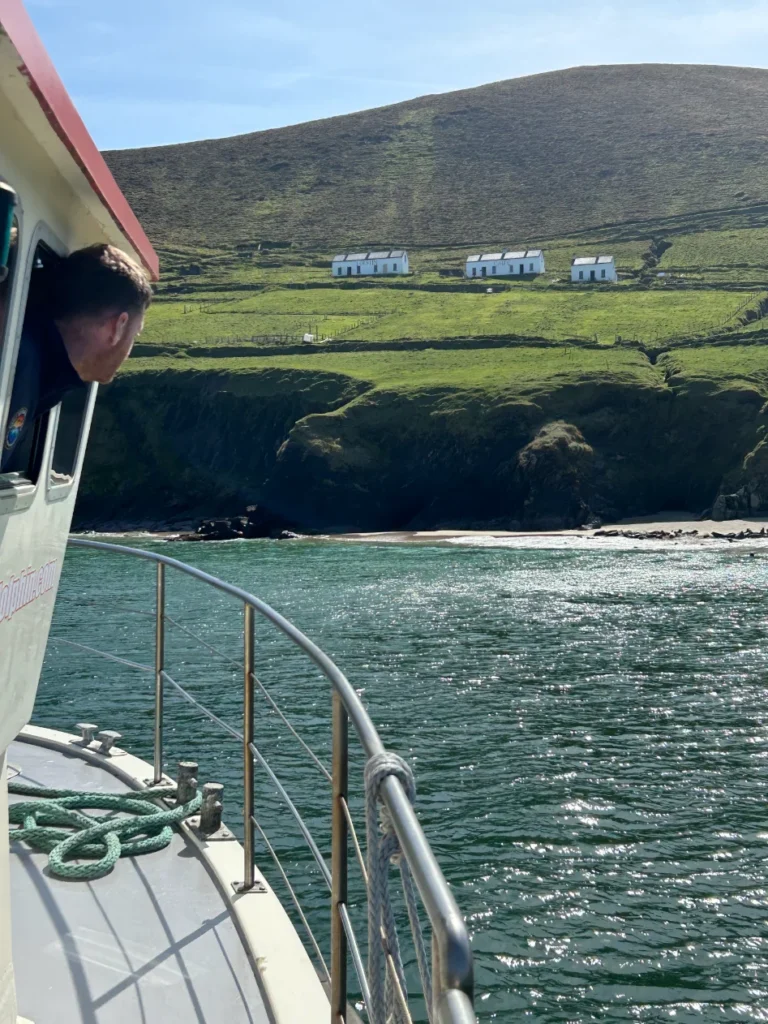
At Dingle Dolphin Boat Tours, we sail past the Great Blasket Island, we don’t land on it, but you don’t need to set foot on it to feel it.
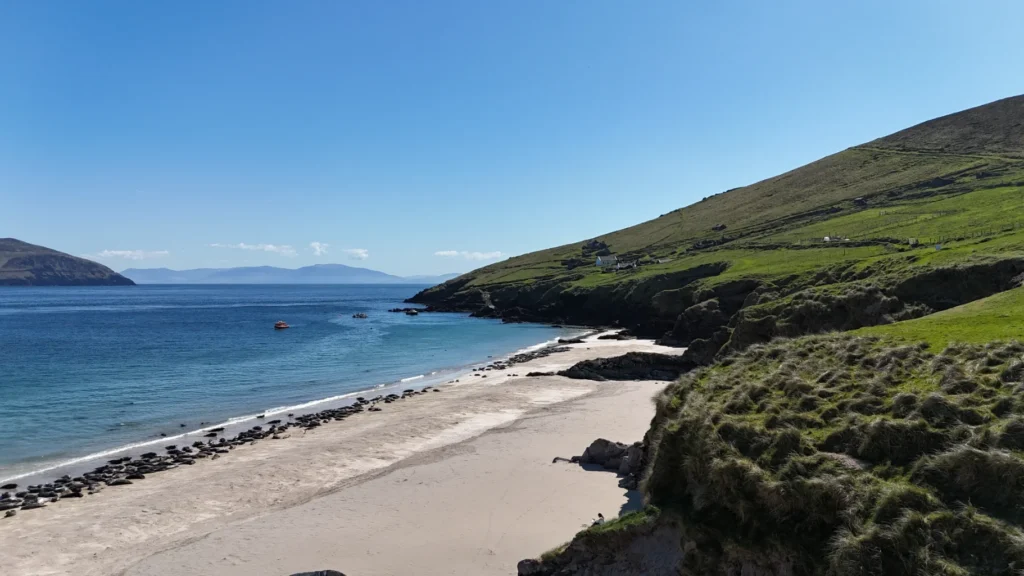
From the water, you get the whole picture. The sweep of the beach, the scale of the cliffs, the ruins up on the hill. It’s one of those views that stays with you. And then the seals appear.
The Great Blasket is home to one of Ireland’s largest grey seal colonies, and when you see them all together hauled out along the shore, it’s quite something. Curious as ever, they never stay still for long.
On a sunny day, the island is soft and golden and beautiful. On a stormy day, it feels wilder, darker, and you really start to understand how extraordinary it was that people lived out there at all.
The Sleeping Giant
Off to the right as you look out towards the Blaskets, you’ll notice a shape on the horizon that looks remarkably like a figure lying on its back, arms folded, face to the sky.
This is the Sleeping Giant, formed by the outline of the islands when viewed from the peninsula. Once you see it, you can’t unsee it. Passengers spot it and point every single time, and it never gets old.
Worth Every Minute
The Blasket Islands are one of those places that leave a mark. History, wildlife, wild Atlantic scenery, all of it together, all of it from the water.
Our Dingle Dolphin Blasket Adventure runs through the season and takes you out along this incredible stretch of coastline. If you’d like to see it for yourself, we’d love to take you.
See you on the water.